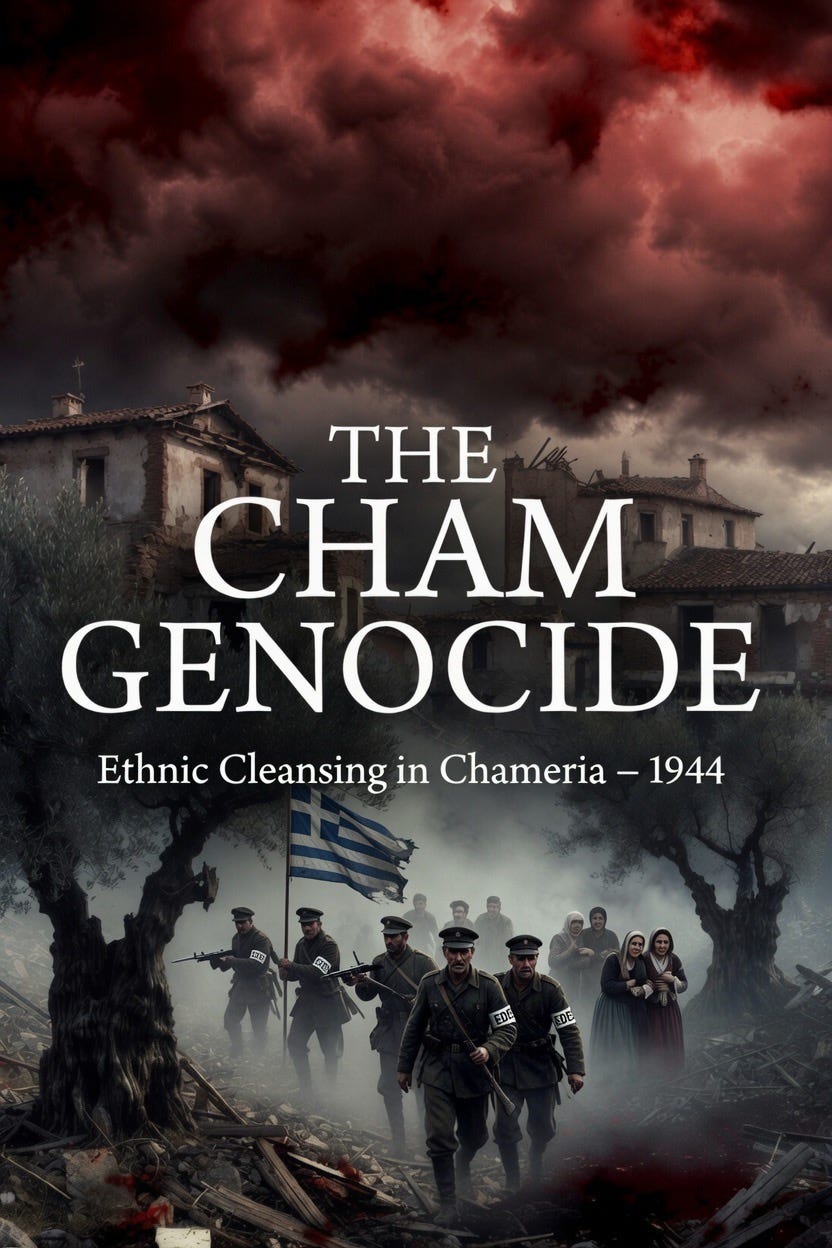
THE CHAM GENOCİDE
June 27, 1944. The Town Square of Paramithia. Early Morning.
An elderly cleric. A merchant. A farmer. No weapons in their hands. No crime to their name. Only Chams a people who had lived, died, and prayed on these lands for centuries. That morning, EDES militiamen herded them into the square. Approximately 70 to 75 people were lined up. An order was given. Shots rang out.
This is one scene from the Cham Genocide.
Only one.
Not the Germans. EDES.
For decades, the Greek state and its historiography defended a single thesis: “The Germans massacred the Chams not us.” This claim went largely unquestioned in Western public discourse. But the archives in London, the United Nations refugee records, and the field reports of the British Special Operations Executive (SOE) dismantle this lie in their own words, with their own dates.
British SOE officer Colonel Christopher Woodhouse and Major John Henniker-Major were both physically present in the Epirus region. Both recorded the same finding: The massacres began immediately after the withdrawal of German forces. The perpetrators were EDES. Woodhouse documented that he personally asked Zervas, repeatedly: “Why are you burning unarmed villages instead of fighting the Germans?” Zervas gave no answer. Because the Germans were never the target. The objective was to ensure that the Cham Albanians could never return to these lands.
EDES was commanded by Napoleon Zervas. His officers are documented: Komninos Pyromaglou, Dimitrios Kitrilakis all Greek officers, all documented commanders of documented operations. Not a single one was ever tried.
The Muslims of Lausanne: Greece’s Selective Memory
A critical legal contradiction must be named here.
The 1923 Treaty of Lausanne placed the Muslim minorities of Greece under international protection. The concept used by the Treaty is not ethnic it is religious: Muslim. This umbrella covers not only Turks, but all Muslim communities within Greek borders including Albanian Muslims.
Yet Greece invokes this concept only when it serves its interests, and discards it when it does not.
When it comes to the Turkish minority in Western Thrace, Greece’s position is consistent: “They are not Turks they are Muslims.” Greece rejects their ethnic identity, recognizes only their religious identity, and uses this reinterpretation of Lausanne to narrow the rights of the Turkish minority.
And the Cham Albanians? They were also Muslim. They also fell under the Treaty of Lausanne’s protective framework. But in 1944 they were massacred and expelled. In 1947 and 1953, they were stripped of citizenship by legislative decree. Not a word of Lausanne was invoked on their behalf.
So for Greece, the category of “Muslim” is an instrument of state policy: deployed to erase Turkish identity when convenient, shelved entirely when Albanian Muslim lives are at stake. This is not inconsistency. It is a coherent and deliberate double standard.
Systematic Atrocity: Village by Village, Mosque by Mosque
Paramithia was only the beginning. In Filiates, more than 600 civilians were massacred by the same method: gather, line up, shoot. Those too old or too frail to flee were locked inside their homes, which were then set ablaze. British officers who later surveyed the area wrote in their reports: “Not a trace of the village remained. Everything was ash.”
The survivor testimonies collected by the Albanian State Commission are still readable today. One woman recounted: “They took my baby from my arms. They bayoneted him in front of my eyes.” An eighty-year-old man was shot dead on the road as he tried to escape.
Systematic rape was documented described by Woodhouse himself as “organized and widespread.” Mosques were first turned into weapons depots, then into makeshift prisons: civilians were locked inside, left without food or water, and those who survived were dragged out and executed.
This was not the unavoidable brutality of war. This was a planned extermination.
The Death March: 27,000 People, Winter, the Mountains
Those who survived the initial massacres estimated between 25,000 and 30,000 people were driven toward the Albanian border. They were permitted to take nothing. Mid-winter. Barefoot. Starving. EDES militias harassed the columns throughout the march, shooting those who fell behind.
UNRRA (United Nations Relief and Rehabilitation Administration) officials registered the refugees as they crossed the border. The language of their reports was clinical; the content was not: severe frostbite, gangrene, acute malnutrition, deaths en route. International researchers estimate the total death toll from the march at between 3,000 and 5,000.
These were not numbers. These were people.
Homes, Lands, Olive Groves Everything Taken
What did they leave behind? Everything. Thousands of homes. 9,500 acres of agricultural land. 68 olive groves. Livestock. Belongings. Memory. All of it passed into the control of the Greek state.
That was not enough. Through laws enacted in 1947 and 1953, the Cham Albanians were collectively stripped of their citizenship on charges of “collaboration with the enemy.” This was not an individual trial. An entire people was declared guilty by a single legislative stroke. The confiscation of their property was given legal cover. The right of return was extinguished. International law has a precise term for this: collective punishment. A war crime.
Erasing the Traces: As Though They Never Existed
What followed the massacres was the quietest, longest-lasting form of violence: the erasure of history.
Historic mosques were leveled by artillery or burned to the ground. Tombstones bearing Ottoman and Albanian inscriptions were bulldozed, smashed, and used as road-paving material. New buildings were constructed atop the foundations of destroyed homes. Place names were changed. Today, it is nearly impossible to find a Muslim cemetery in Chameria.
The goal was not only to expel a people. The goal was to prove that they had never existed there at all. To erase the memory of the land itself. To destroy every trace in stone, in mud, in marble.
A people was dispossessed not only of their land, but of their history.
The Archives Do Not Stay Silent
Greece, to this day, does not officially recognize these events. The “Germans did it” narrative still occasionally resurfaces. But the British National Archives at Kew Gardens are open. The SOE field reports are declassified. The UNRRA documents are accessible in digital archives. Woodhouse’s memoir is in print. The United Nations refugee records have not disappeared.
The archives do not stay silent. And what they say is this: This was a planned genocide. The perpetrators were known. They had names. They had ranks. And they were never held to account.
Today, on June 27th, we stand in solidarity with the Albanian people and carry this profound grief alongside them.
We do not know the names of those shot in the square at Paramithia. But they were there. We cannot see the faces of those killed at Filiates. But they lived. We cannot read the names of the children who froze to death in the mountains. But they existed.
The tombstones were smashed. The mosques were burned. The archives were suppressed. But memory stands in a place no bulldozer can reach.
In Chameria, a people was massacred, expelled, and erased. And the world, by and large, looked away, fell silent, and forgot.
We do not forget. We carry this grief. And it is our duty despite those who would bury it to bring this history into the light.
The Cham martyrs will not be forgotten. Chameria will not be forgotten.
#ChamGenocide #Chameria #EthnicCleansing #ArchiveDocuments #HistoricalMemory #TreatyOfLausanne #CrimesAgainstHumanity
27 Haziran 1944. Paramithia Meydanı. Sabahın Erken Saatleri.
Yaşlı bir din adamı, bir tüccar, bir çiftçi. Ellerinde silah yok. Suçları yok. Sadece Çamlılar yüzyıllardır bu topraklarda yaşayan, bu topraklarda ölen, bu topraklarda ibadet eden bir halk. O sabah EDES milisleri onları meydana sürdü. Yaklaşık 70-75 kişi sıralandı. Emir verildi. Kurşunlar patladı.
Bu, Çameria Soykırımı’nın bir sahnesidir. Sadece bir sahnesi.
Almanlar Değil, EDES
Onlarca yıl boyunca Yunan devleti ve tarih yazımı tek bir tez savundu: “Çamlıları Almanlar katletti, biz değil.” Bu tez, Batı kamuoyunda uzun süre sorgulanmadan kabul gördü. Ancak Londra’daki arşivler, Birleşmiş Milletler mülteci kayıtları ve İngiliz Özel Harekat Dairesi’nin (SOE) saha raporları bu yalanı, kendi kelimeleriyle, kendi tarihleriyle çürütüyor.
İngiliz SOE subayı Albay Christopher Woodhouse ve Binbaşı John Henniker-Major, Epir bölgesinde bizzat sahada bulunan iki isimdir. Her ikisi de raporlarında aynı tespiti kaydetti: Katliamlar, Alman kuvvetlerinin bölgeden çekilmesinin hemen ardından başladı. Failler EDES’tir. Woodhouse, Zervas’a defalarca şunu sorduğunu aktardı: “Neden Almanları değil, silahsız köylüleri yakıyorsunuz?” Zervas yanıt vermedi. Çünkü hedef Almanlar değildi. Hedef, Çam Arnavutlarının bu topraklardan bir daha geri dönememesini sağlamaktı.
EDES’i komuta eden Napoleon Zervas’tı. Yanındaki isimler belgelenmiştir: Komninos Pyromaglou, Dimitrios Kitrilakis hepsi Yunan subaylar, hepsi sahada emir veren ve uygulayan isimler. Hiçbiri yargılanmadı.
Lozan’ın Müslümanları: Yunanistan’ın Seçici Hafızası
Burada kritik bir hukuki çelişkiye dikkat çekmek gerekir.
1923 Lozan Antlaşması, Yunanistan’daki Müslüman azınlıkları koruma altına almıştır. Antlaşmanın kullandığı kavram etnik değil, dinîdir: Müslüman. Bu kapsam yalnızca Türkleri değil, Yunanistan sınırları içindeki tüm Müslüman toplulukları Arnavut Müslümanları dahil içermektedir.
Ancak Yunanistan, bu kavramı işine geldiği zaman kullanır, işine gelmediği zaman görmezden gelir.
Batı Trakya’daki Türk azınlık söz konusu olduğunda Yunanistan’ın tutumu şudur: “Onlar Türk değil, Müslümandır.” Etnik kimliği reddeder, yalnızca dinî kimliği tanır Lozan’ı kendine göre yorumlayarak Türk azınlığının haklarını daraltmaya çalışır.
Peki Çam Arnavutları? Onlar da Müslümandı. Lozan’ın koruma şemsiyesi altındaydılar. Ama 1944’te katledildi, sürüldü ve mülkleri gasp edildi. 1947 ve 1953’te çıkarılan yasalarla vatandaşlıktan çıkarıldılar. Lozan’dan tek kelime edilmedi.
Demek ki Yunanistan için “Müslüman” kavramı bir hukuki araçtır: Türk kimliğini silmek gerektiğinde kullanılır, Arnavut Müslümanları korumak gerektiğinde ise rafa kaldırılır. Bu çelişki, tesadüf değil; tutarlı bir devlet politikasının yansımasıdır.
Sistematik Bir Vahşet: Köy Köy, Cami Cami
Paramithia bir başlangıçtı. Filyat’ta 600’den fazla sivil aynı yöntemle infaz edildi: topla, sırala, vur. Kaçamayan yaşlılar ve kadınlar evlerine kilitlendi, evler ateşe verildi. İngiliz subaylar bölgeyi gezdiklerinde raporlarına şunu yazdılar: “Köyden eser kalmamıştı. Her şey küldü.”
Arnavutluk Devlet Komisyonu kayıtlarında toplanan hayatta kalan ifadeleri bugün hâlâ okunabilir. Bir kadın şunu anlattı: “Bebeğimi kucağımdan aldılar. Gözlerimin önünde süngülediler.” Seksen yaşındaki bir adam kaçmaya çalışırken yolda kurşunlandı. Sistematik tecavüz raporlandı Woodhouse’un kendi ifadesiyle “düzenli ve yaygın” biçimde. Camiler önce silah deposuna, sonra cezaevine çevrildi: siviller içeri kilitlendi, aç ve susuz bırakıldı, ardından dışarı çıkarılıp öldürüldü.
Bu, savaşın kaçınılmaz vahşeti değildi. Bu, planlı bir imhaydı.
Ölüm Yürüyüşü: 27.000 Kişi, Kış, Dağlar
Katliamdan sağ kurtulanlar tahminlere göre 25.000 ile 30.000 arasında insan Arnavutluk sınırına doğru sürüldü. Yanlarına hiçbir şey almalarına izin verilmedi. Kış ortasında, yalın ayak, aç. EDES milisleri yürüyüş boyunca kafilelerini taciz etti; geride kalanları vurdu.
UNRRA (Birleşmiş Milletler Yardım ve Rehabilitasyon İdaresi) yetkilileri sınırı geçen mültecileri kayıt altına aldı. Raporlardaki dil soğuktu ama içerik değildi: donmuş uzuvlar, kangren, ileri derece yetersiz beslenme, yolda ölümler. Uluslararası araştırmacılar toplam yürüyüş can kaybını 3.000 ile 5.000 arasında tahmin etmektedir.
Bunlar rakam değil. Bunlar insanlardı.
Mülkler, Topraklar, Zeytinlikler Hepsi Gitti
Geride ne kaldı? Her şey. Binlerce ev, 9.500 dönüm tarım arazisi, 68 zeytinliği, hayvanlar, eşyalar, hatıralar. Hepsi Yunan devletinin kontrolüne geçti.
Yetmedi. 1947 ve 1953’te çıkarılan özel yasalarla Çam Arnavutları toplu olarak “düşmanla işbirliği” suçlamasıyla vatandaşlıktan çıkarıldı. Bu bireysel bir yargılama değildi. Tüm bir halk, tek bir kalemde, suçlu ilan edildi. Mallarına el konulması yasal zemine oturtuldu. Geri dönüş hakkı ortadan kaldırıldı. Uluslararası hukuk buna net bir isim verir: kolektif cezalandırma. Savaş suçu.
İzlerin Silinmesi: Sanki Hiç Yaşamamışlar Gibi
Katliamdan sonra gelen en sessiz, en uzun süren şiddet buydu: tarihin silinmesi.
Bölgedeki tarihi camiler top ateşiyle yıkıldı ya da yakıldı. Osmanlıca ve Arnavutça yazıtlı mezar taşları buldozerlerle söküldü, kırıldı, yol yapımında kullanıldı. Evlerin temelleri üzerine başka binalar inşa edildi. Yer adları değiştirildi. Bugün Çameria’da bir Müslüman mezarlığı bulmak neredeyse imkânsızdır.
Amaç yalnızca bir halkı sürmek değildi. Amaç, o halkın orada hiç var olmadığını kanıtlamaktı. Toprak hafızasını silmek. Taştan, çamurdan, mermerden her izi yok etmek.
Bir halk, toprağından değil, tarihinden de edildi.
Arşivler Susmaz
Yunanistan bugün hâlâ resmi düzeyde bu olayları tanımıyor. “Almanlar yaptı” tezi zaman zaman hâlâ dolaşıma sokuluyor. Ancak Kew Gardens’daki İngiliz Ulusal Arşivleri açık. SOE raporları sınıflandırılmış değil. UNRRA belgeleri dijital arşivlerde erişilebilir. Woodhouse’un anı kitabı yayında. Birleşmiş Milletler mülteci kayıtları kaybolmuş değil.
Belgeler susmaz. Ve belgeler şunu söylüyor: Bu planlı bir soykırımdı. Failleri biliniyordu. İsimleri vardı. Rütbeleri vardı. Ve hesap vermediler.
Bugün, 27 Haziran’da, Arnavut halkının bu derin acısını yürekten paylaşıyoruz.
Paramithia meydanında kurşuna dizilenlerin adını bilmiyoruz. Ama oradaydılar. Filyat’ta öldürülenlerin yüzlerini göremiyoruz. Ama yaşadılar. Dağlarda donarak ölen çocukların isimlerini okuyamıyoruz. Ama vardılar.
Mezar taşları kırıldı. Camiler yakıldı. Arşivler susturulmaya çalışıldı. Ama hafıza, buldozerin ulaşamayacağı bir yerde durur.
Çameria’da bir halk katledildi, sürüldü, silinmeye çalışıldı. Ve dünya büyük ölçüde baktı, sustu, unuttu.
Biz unutmuyoruz. Bu acıyı taşıyoruz. Ve bu tarihi, onu gömmek isteyenlere rağmen, gün ışığına taşımak boynumuzun borcudur.
Çam şehitleri unutulmayacak. Çameria unutulmayacak.
#ÇameriaKatliamı #ÇamSoykırımı #EtnikTemizlik #ArşivBelgeleri #Çameria #TarihiHafıza #LozanAntlaşması